
Energy efficiency enters a new phase in 2026. It is no longer just a technical matter or a regulation-driven requirement; it is becoming a strategic decision with a direct impact on costs, competitiveness, and access to financing.
The sector is reaching maturity. Energy Savings Certificates (ESCs), operational digitalisation, and the growing professionalisation of the market are redefining how companies manage energy in Spain.
At Bettergy, we analyse the trends that explain why, in 2026, energy efficiency will stop being a mere obligation and consolidate as an investment with demonstrable returns.
Why 2026 Marks a Turning Point for Energy Efficiency
This is not an abrupt shift but the result of a gradual maturation process. In 2026, three key factors will shape the sector:
Increasing regulatory pressure from Europe.
The implementation of the ESC system.
A growing demand to justify every investment based on return, risk, and strategic priority.
Across Europe, the principle of Efficiency First sets the course: reduce demand through cost-effective measures before investing in new energy supply.
Spain has made progress and ranks among the most active countries, but it is still catching up with markets that began this journey years ago—integrating efficiency structurally into industrial and business models.
The outcome is clear: energy efficiency is no longer managed as a compliance issue but as a business decision aimed at reducing risk exposure, stabilising costs, and delivering measurable results.
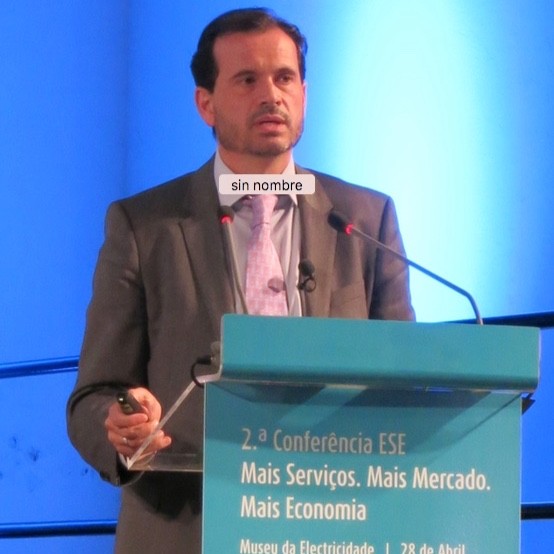
“The biggest change in energy efficiency is that it has firmly entered the decision-makers’ agenda”
Energy Savings Certificates (ESCs): The Economic Driver of Change
If there is one factor driving the sector forward in 2026, it is the rollout of Energy Savings Certificates (ESCs).
ESC do not generate savings by themselves, but they allow companies to turn energy savings into direct financial returns, reducing payback periods and accelerating efficiency investments.
They also align businesses, engineering firms, installers, energy retailers, and public administrations under a common economic framework.
Since their introduction in 2023 (RD 36/2023), the system has consolidated rapidly:
- In 2024, 696 applications were registered, representing 1.9 TWh of savings.
- In 2025, 1,855 applications, equivalent to 3.0 TWh of savings requested by September. (Source: ANESE Energy Efficiency Observatory)
(Source“Observatorio de Eficiencia Energética de ANESE”)
“The ability to convert savings into financial returns through ESCs will remain the main driver of energy efficiency in 2026”

A Broader, More Demanding Energy Efficiency Market
Until now, the ESC market has been dominated by large industrial consumers. In 2026, this will start to change, with SMEs entering the scene and smaller engineering firms and installers playing a bigger role.
As a result, the market will expand but also become more demanding. Monetising smaller yet more numerous savings will increase technical complexity and reinforce the importance of players who can demonstrate savings with solid, traceable evidence.
A Strategic Shift: Efficiency on the Boardroom Agenda
Another key change in 2026 is organisational rather than technological. Energy efficiency will no longer be confined to maintenance or engineering departments—it will take a seat at the boardroom table.
This shift is driven by two factors:
- Greater regulatory pressure from Europe.
- The monetisation of savings, making their financial impact visible.
“Decision-makers are now in the meetings, voicing opinions, supporting investments, and prioritising energy efficiency initiatives”
Consequently, projects must speak the language of senior management: return, risk, and evidence—not just technical arguments.
From Isolated Actions to Managed Energy Assets
Beyond who makes the decisions, the approach to efficiency is changing. It is no longer seen as a series of isolated actions but as an energy asset managed over time.
Monitoring is evolving. It is no longer about measuring for reporting purposes but measuring to act, with real-time control.
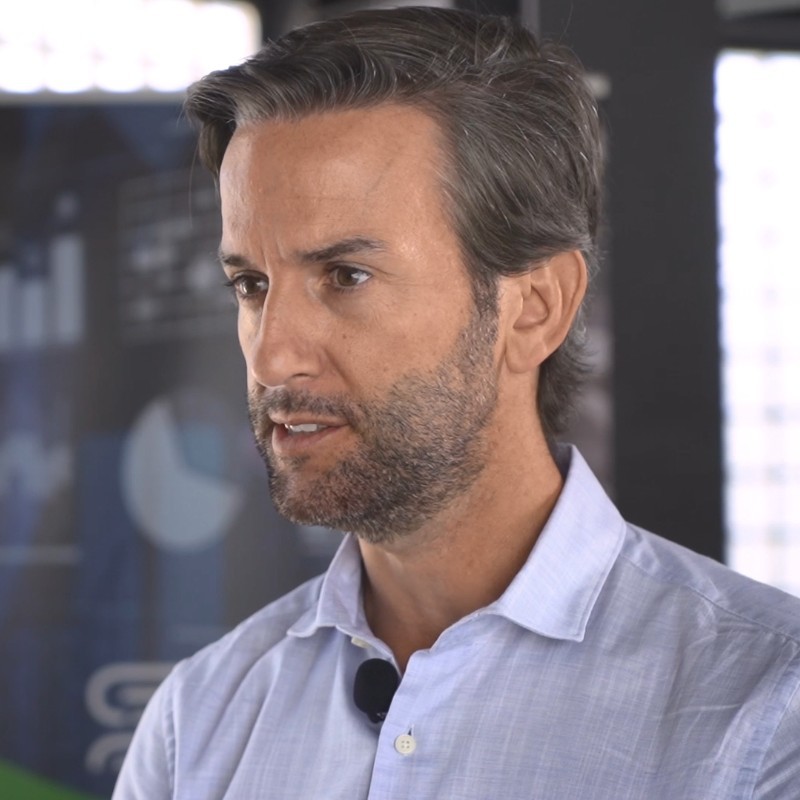
“The key is no longer promising savings but proving them with evidence”
2026: The Year of Regulatory Obligations
2026 will also be the year when several regulatory obligations can no longer be postponed.
Directive (EU) 2023/1791 strengthens the requirement for large consumers to carry out energy audits or implement certified management systems such as ISO 50001. Meanwhile, the Energy Performance of Buildings Directive (EPBD) accelerates real planning for energy retrofits.
Companies with an average annual consumption above 2.77 GWh must:
- Complete audits by October 2026, or
- Implement a certified energy management system by October 2027.
All this falls under the Fit for 55 package, which raises Europe’s ambition on efficiency and emissions reduction. In 2026, inaction is no longer an option.
Energy Digitalisation: From Data to Financial Returns
The real leap in 2026 will not be about how much data is collected but how it is used.
“We will move from monitoring to measure to monitoring to act”
“The challenge lies in integrating data to anticipate deviations and operate in real time”
Key developments include:
- Integration of control systems (BMS).
- Energy management platforms with an economic focus.
- Advanced analytics.
- AI applied to continuous operations.
Spain has improved in data collection but still lacks systematic integration and exploitation in daily operations.
Technologies Driving Investment in 2026
The technologies shaping the agenda will be those capable of delivering significant and demonstrable savings:
- High-temperature heat pumps.
- Waste heat recovery.
- Steam and compressed air optimisation.
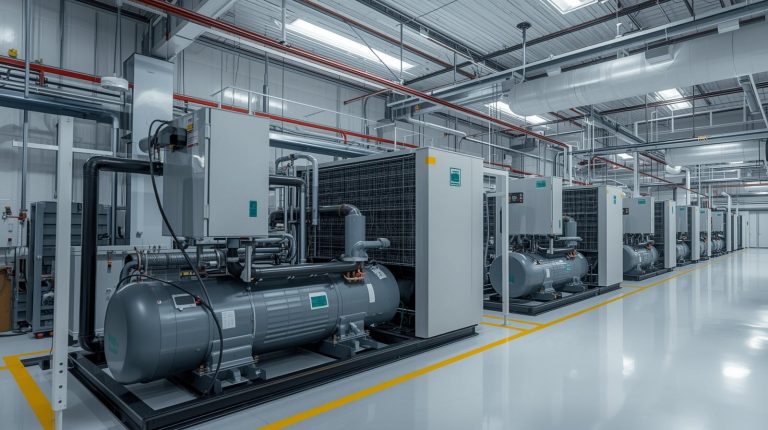
- Efficient cooling in data centres.
- Industrial solar thermal energy.
“A project based on high-temperature heat pumps capable of generating over 80 GWh of savings clearly shows where the sector is heading”
Professionalisation and the Role of Specialist Partners
Technical complexity makes it essential to work with specialised partners.
Market growth has exposed an uncomfortable reality: the sector needs professionalisation. The arrival of players without sufficient technical expertise has led to poor practices, creating confusion among clients and undermining trust in energy efficiency as a real solution.
Experts agree that the sector must take a step forward—adopt clear technical standards, speak a common language, and assume greater responsibility for project execution.
In this context, the specialist partner becomes a key figure to reduce risks and ensure real returns.
Conclusion: 2026 Consolidates Energy Efficiency as a Competitive Advantage
Spain enters 2026 with growing maturity, particularly in industry and large consumers. Efforts are focused on high-impact projects, process electrification, heat recovery, and data-driven operational optimisation.
Experts’ advice is clear: measure accurately, manage better, and rely on specialists.
Energy efficiency is no longer a tactical option. It is a competitive advantage for organisations that know how to integrate it into their strategy.
2026 will not be the year of promises. It will be the year of proof.